


Stops
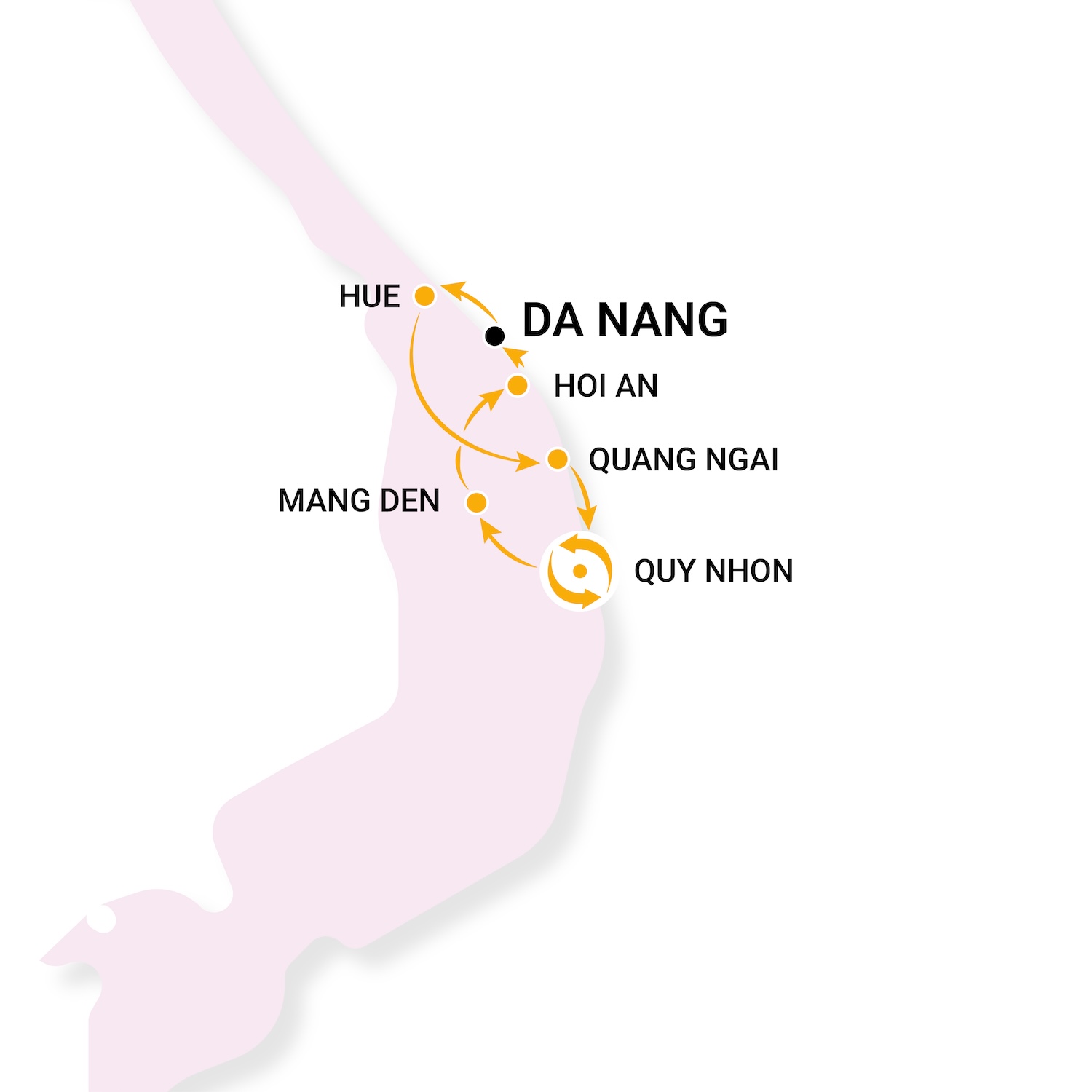
Itinerary
-
DAY 1: DA NANG – HUE (145 km)
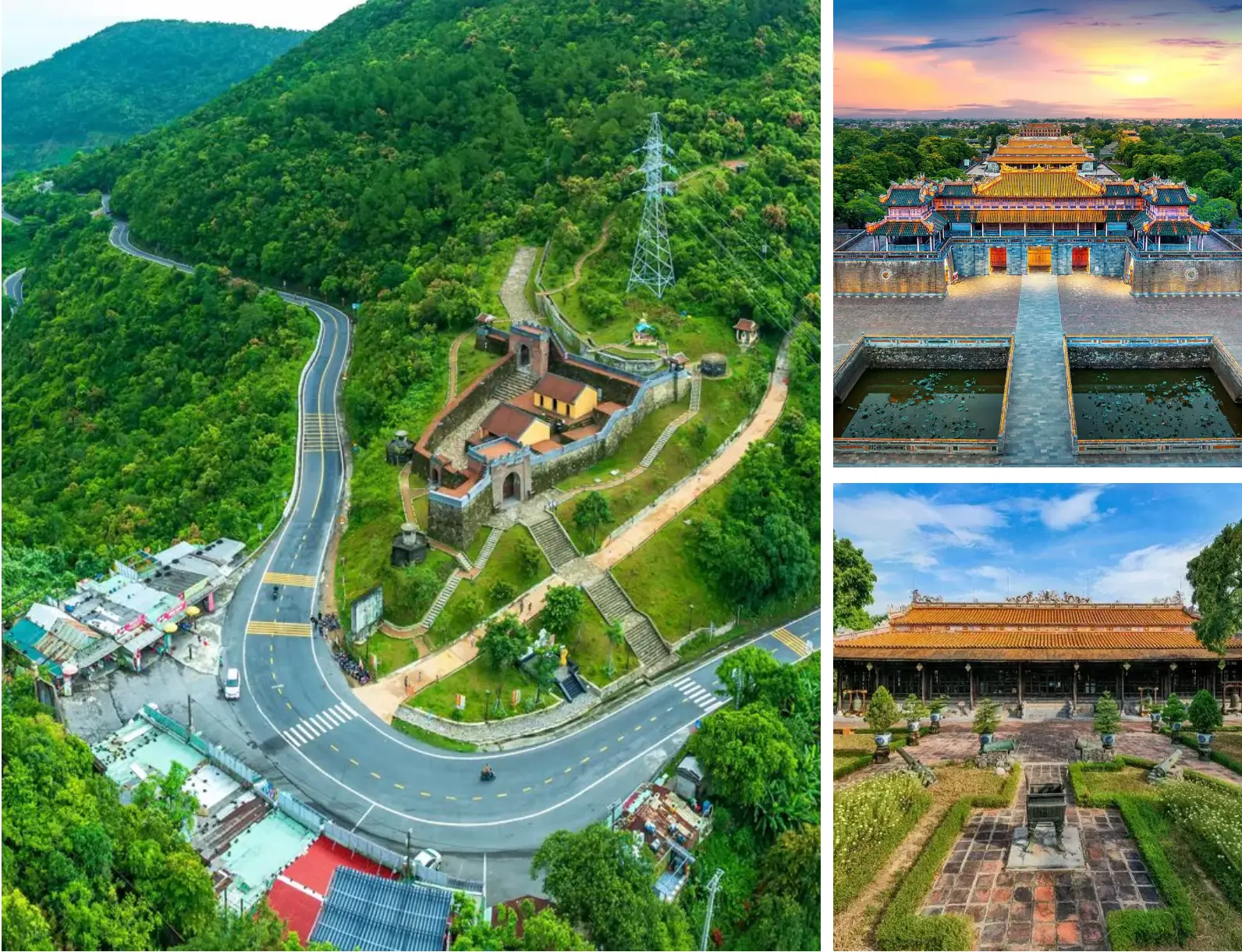
Departing from Da Nang, a young coastal city by the Han River, you temporarily leave the bustling streets behind and head north along the Hai Van Pass. The winding road follows the mountain slopes, opening up views that alternate between the sea and the green forest. Stop at Hai Van Gate, where the group can appreciate the grandeur of the ancient gateway before continuing to Hue.
Hai Van Gate: An ancient gateway on the summit of Hai Van Pass, standing out amid the mountain and sea scenery. Guests can enjoy the views, take photos, and experience the grandeur of the route connecting Da Nang and Hue.
Hue Imperial City:Explore the imperial space of the Nguyen Dynasty through its gates, courtyards, palaces, and ancient decorative details. This stop helps guests visualize the grandeur of the former imperial court.
Museum of Royal Antiquities: The main exhibition building of the museum is Long An Palace, built during the reign of Emperor Thieu Tri. It currently preserves and displays many valuable artifacts of the Nguyen Dynasty.
Overnight in Hue.
-
DAY 2: HUE – QUANG NGAI (300 km)
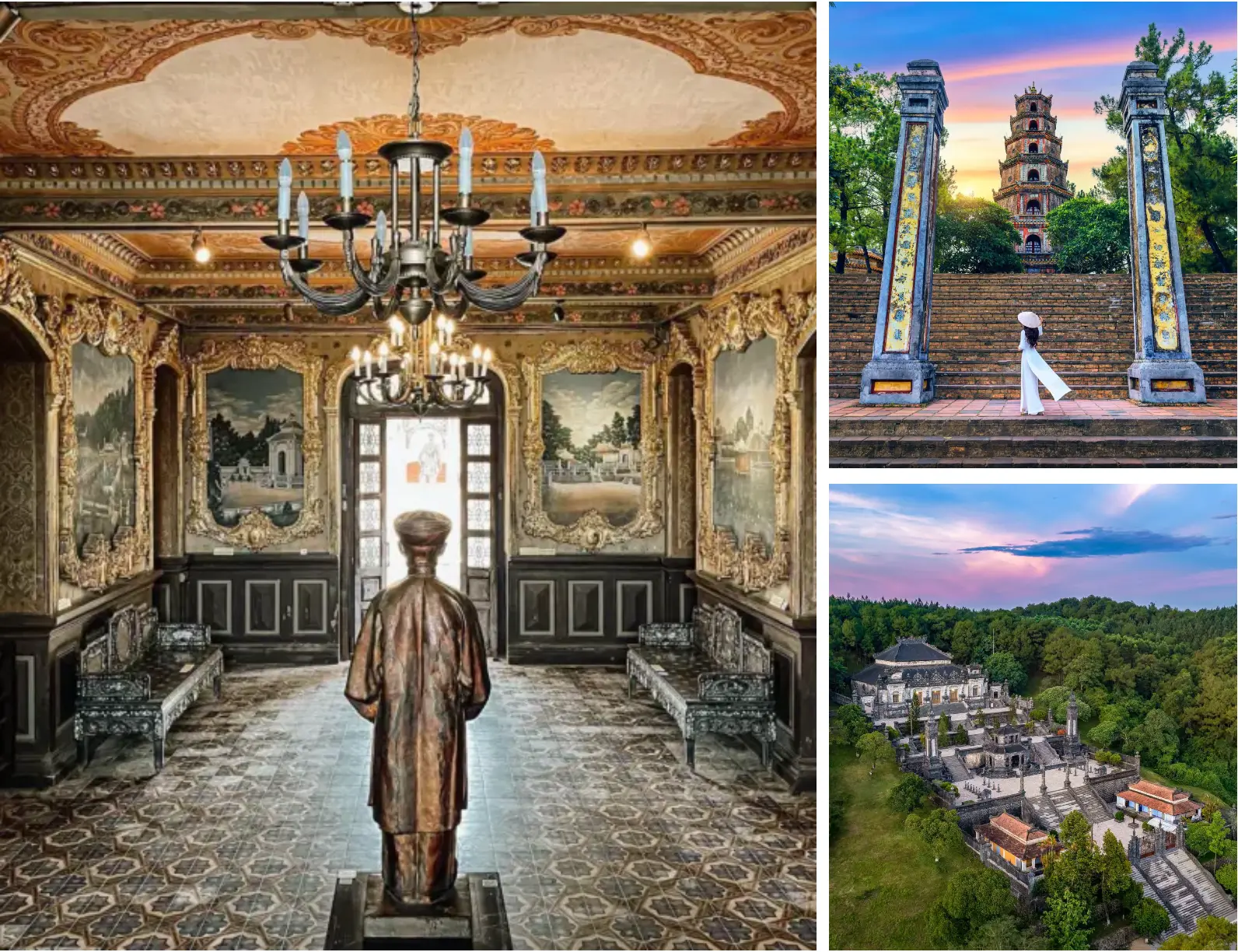
From Hue, where the old tiled roofs and the Perfume River evoke a gentle charm, the group begins the new day with a visit to An Dinh Palace, pays respects at Thien Mu Pagoda beside the peaceful Perfume River, and visits Khai Dinh Tomb with its distinctive architectural features. These architectural landmarks serve as a lingering farewell before guests leave the ancient capital and travel south through the Lang Co area toward Quang Ngai. Along the journey, the scenery of Central Vietnam unfolds continuously through the vehicle windows, carrying the story from the land of heritage to the peaceful region along the Tra River.
An Dinh Palace: Located beside the An Cuu River, formerly in De Bat Ward, Hue Town, it was the private palace of Emperor Khai Dinh from the time he was Crown Prince until he became emperor. It was later inherited by Bao Dai, who lived here after his abdication.
Thien Mu Pagoda: A pagoda beside the Perfume River, featuring the distinctive Phuoc Duyen Tower. Its tranquil setting and poetic river scenery provide a gentle experience after the sightseeing journey.
Khai Dinh Tomb: A structure combining Eastern and Western architectural features. Its elaborate ceramic and porcelain mosaic art and intricate decorative details are notable highlights.
Overnight in Quang Ngai.
-
DAY 3: QUANG NGAI – QUY NHON (210 km)
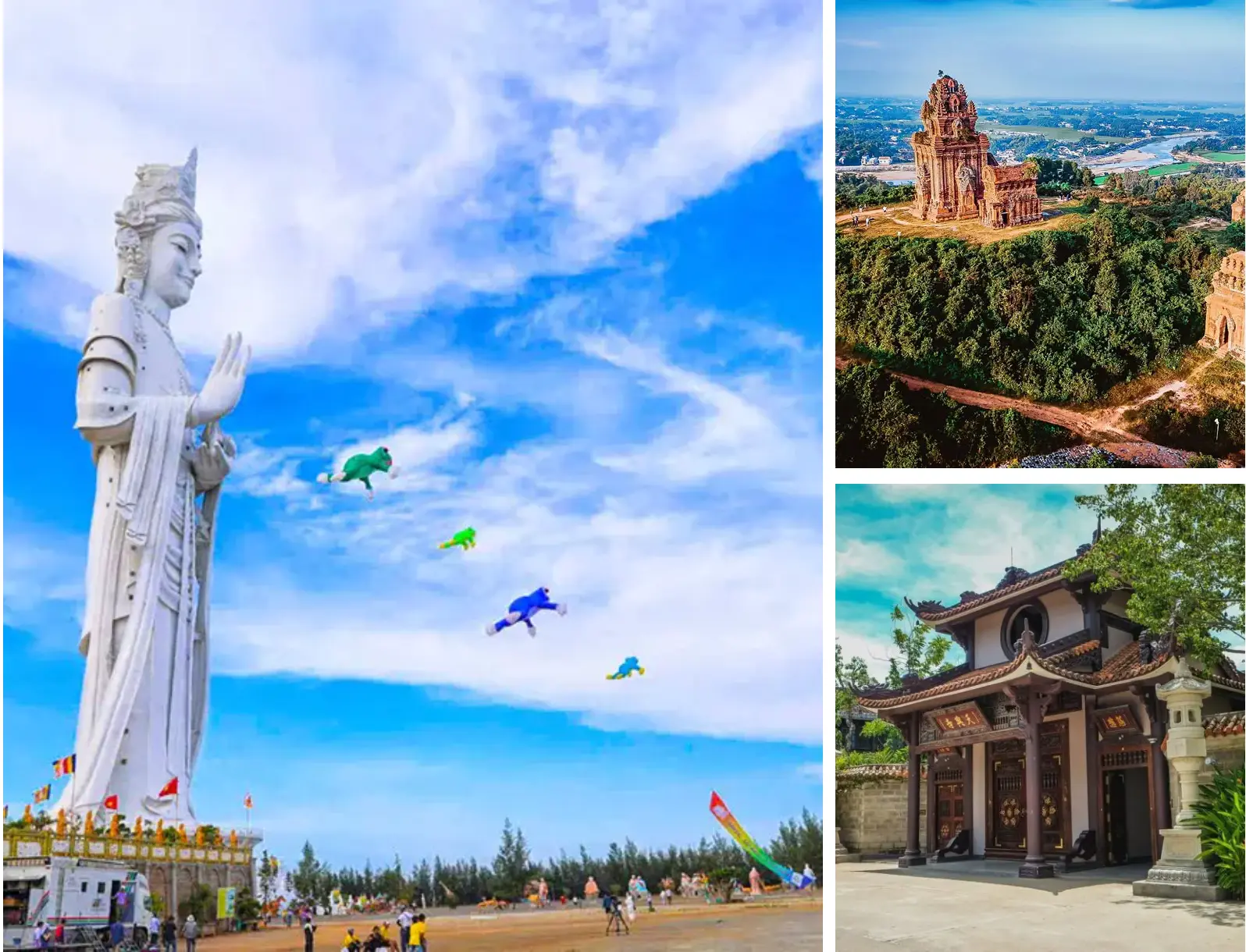
Leaving the hotel in Quang Ngai, guests visit Minh Duc Pagoda to learn about the historical marks of the region before continuing south toward Quy Nhon. The urban rhythm gradually fades behind, giving way to successive landscapes along the Central Vietnamese coast. The journey then takes the group to Banh It Towers, where the ancient brick structures stand out against the green hills, followed by Thien Hung Pagoda with its tranquil garden setting. Upon reaching central Quy Nhon, guests can experience the approachable charm of the coastal city, where the rhythm of urban life blends with the expansive sky and sea.
Minh Duc Pagoda: An expansive pagoda complex featuring a prominent Avalokitesvara statue. Guests can visit, pay respects, and enjoy the scenery in a peaceful atmosphere.
Banh It Towers: A complex of Cham towers on a hill, with distinctive fired-brick structures standing out against the green landscape. Guests can admire the ancient architecture and take photos reflecting Cham cultural heritage.
Thien Hung Pagoda:Traditional architecture harmoniously combined with garden scenery. The peaceful setting is suitable for leisurely sightseeing and paying respects.
Overnight in Quy Nhon.
-
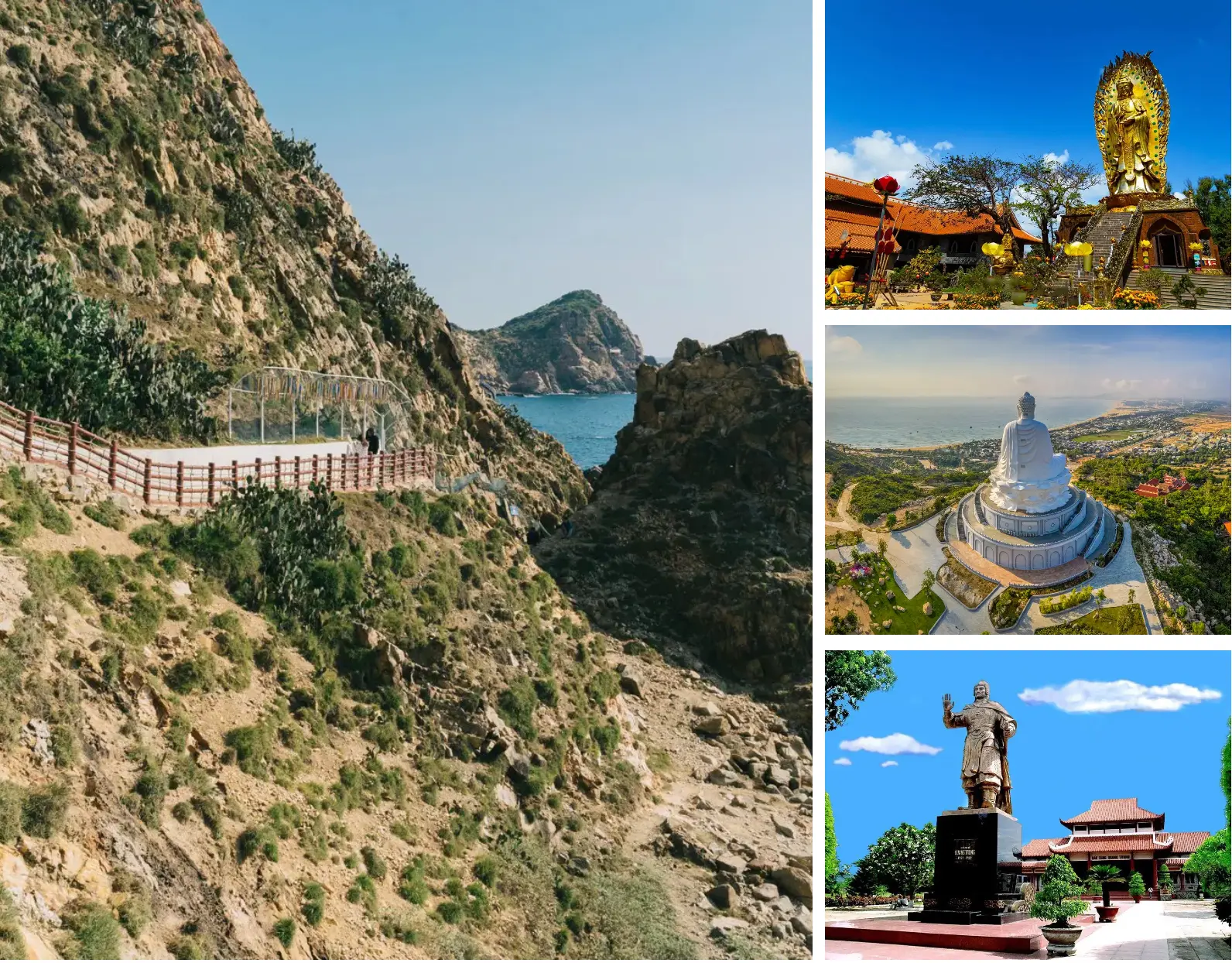
DAY 4: QUY NHON – MANG DEN (250 km)
From the coastal city of Quy Nhon, the group heads toward Nhon Ly, where the sea breeze and rocky scenery at Eo Gio begin a day of diverse experiences. After a peaceful stop at Ngoc Hoa Monastery and Ong Nui Pagoda, guests leave the coastal region and turn west toward Tay Son, visiting the Quang Trung Museum and the temple complex to learn about a historical period. The vehicle then continues toward the Central Highlands; the scenery gradually changes from the plains to mountainous roads, creating the feeling of entering a different land. Mang Den welcomes the group with the rhythm of a mountain town.
Eo Gio: Rocky cliffs embrace the sea inlet, creating a distinctive and expansive landscape. This is a stop for enjoying the sea views, the fresh breeze, and taking photos amid nature.
Ngoc Hoa Monastery:A prominent place of worship featuring a twin Buddha statue, providing a peaceful moment beside the coastal area of Nhon Ly.
Ong Nui Pagoda: Famous for the 69-meter-high seated Shakyamuni Buddha statue, including its pedestal, which is recognized as one of the largest seated Buddha statues in Southeast Asia.
Quang Trung Museum and Tay Son Temple Complex: Learn about the Tay Son movement and the national hero Quang Trung through documents, artifacts, and the solemn memorial space.
Overnight in Mang Den.
-
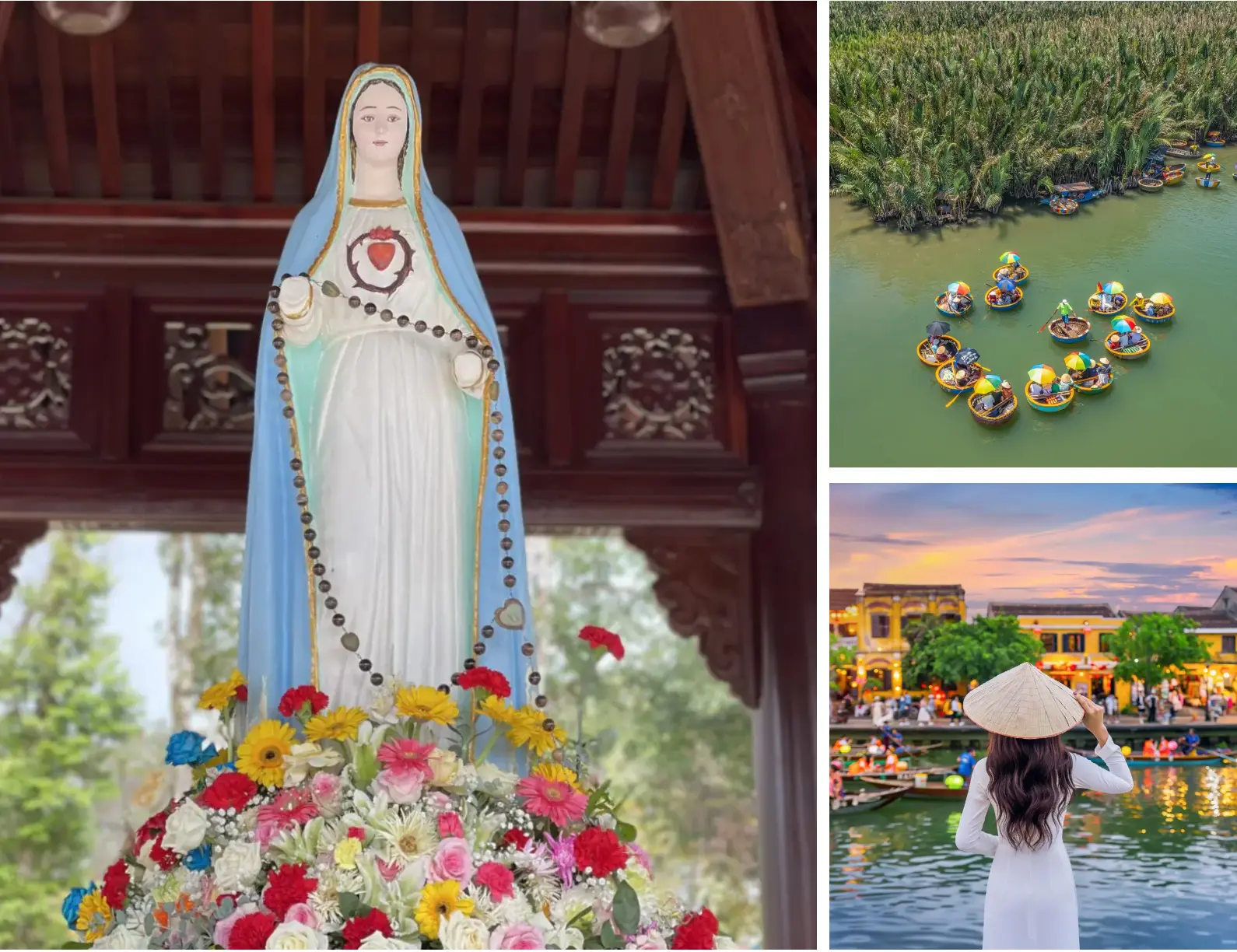
DAY 5: MANG DEN – HOI AN (260 km)
Departing from Mang Den, guests visit Our Lady of Mang Den, admire the spiritual center of the local people, and listen to the mysterious story of Our Lady, sincerely praying for peace in their hearts. The highland scenery and peaceful atmosphere of this pilgrimage site create a gentle beginning before the group continues toward Quang Ngai and down to the plains, then turns north toward Hoi An. Along each section of the journey, the green mountain forests gradually give way to rural landscapes and coastal towns. Upon arriving in Hoi An, yellow-walled houses, old tiled roofs, and lanterns open up a warm atmosphere, inviting visitors to slow their steps amid the charm of the ancient town.
Our Lady of Mang Den: A pilgrimage site amid the tranquil highland landscape. Guests also have the opportunity to try their hand at shaping pottery products, coloring them according to their own preferences, and taking them home as souvenirs.
Cam Thanh Coconut Forest: Explore the cool, green nipa palm landscape and small waterways. The river experience offers a simple and intimate perspective of Hoi An.
Hoi An Ancient Town:Hoi An was once a bustling international trading port, where merchant ships from Japan, China, and the West met throughout the 17th and 18th centuries. The old streets imbued with the passage of time will surely give you an unforgettable memory.
Overnight in Hoi An.
-
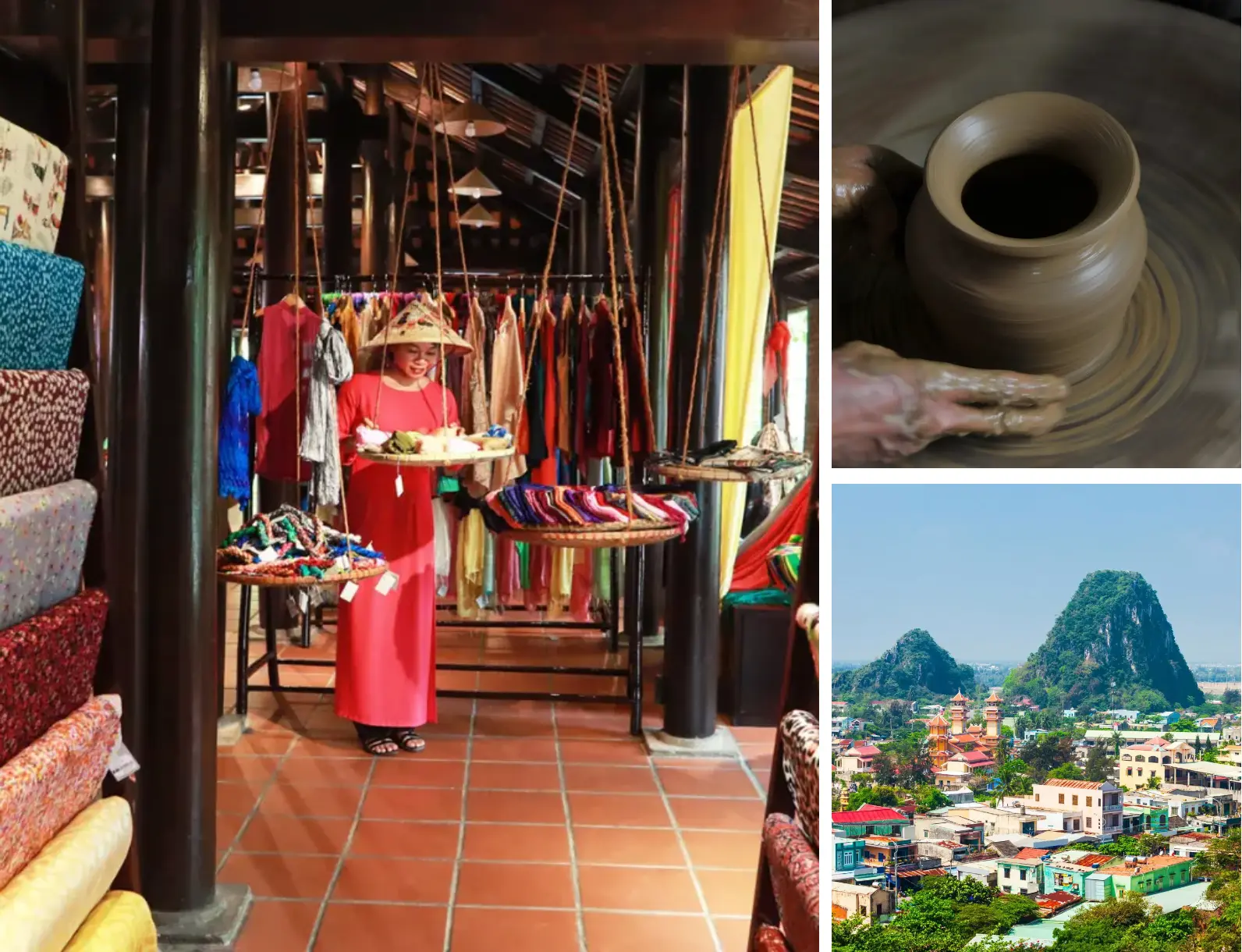
DAY 6: HOI AN – DA NANG (55 km)
From Hoi An, with its small streets imbued with an old-world charm, the journey offers guests a different perspective of Hoi An through two traditional craft villages: the Silk Village and Thanh Ha Pottery Village. The group continues to visit Thanh Ha Pottery Village and the Silk Village, where stories of earth, nature, and the hands of artisans continue to be preserved through each product. Continuing north, guests visit Marble Mountains before arriving in central Da Nang. From the rhythm of traditional craft villages to the limestone mountains and the broad streets of the coastal city, each stage offers its own interesting experience.
Silk Village: This place preserves and recreates the history of more than 300 years of sericulture and silk weaving in Quang, together with the cultural space of the “Maritime Silk Road” in the 17th century.
Thanh Ha Pottery Village: Learn about traditional pottery through the processes of shaping and creating simple handmade products. The skill of the artisans is a highlight that makes the village attractive. Guests also have the opportunity to try their hand at shaping pottery products, coloring them according to their own preferences, and waiting to take them home as souvenirs.
Marble Mountains: A complex of limestone mountains, caves, and pagodas creating a distinctive landscape. Guests explore the natural beauty intertwined with the spiritual atmosphere of this scenic site.
Overnight in Da Nang.
-
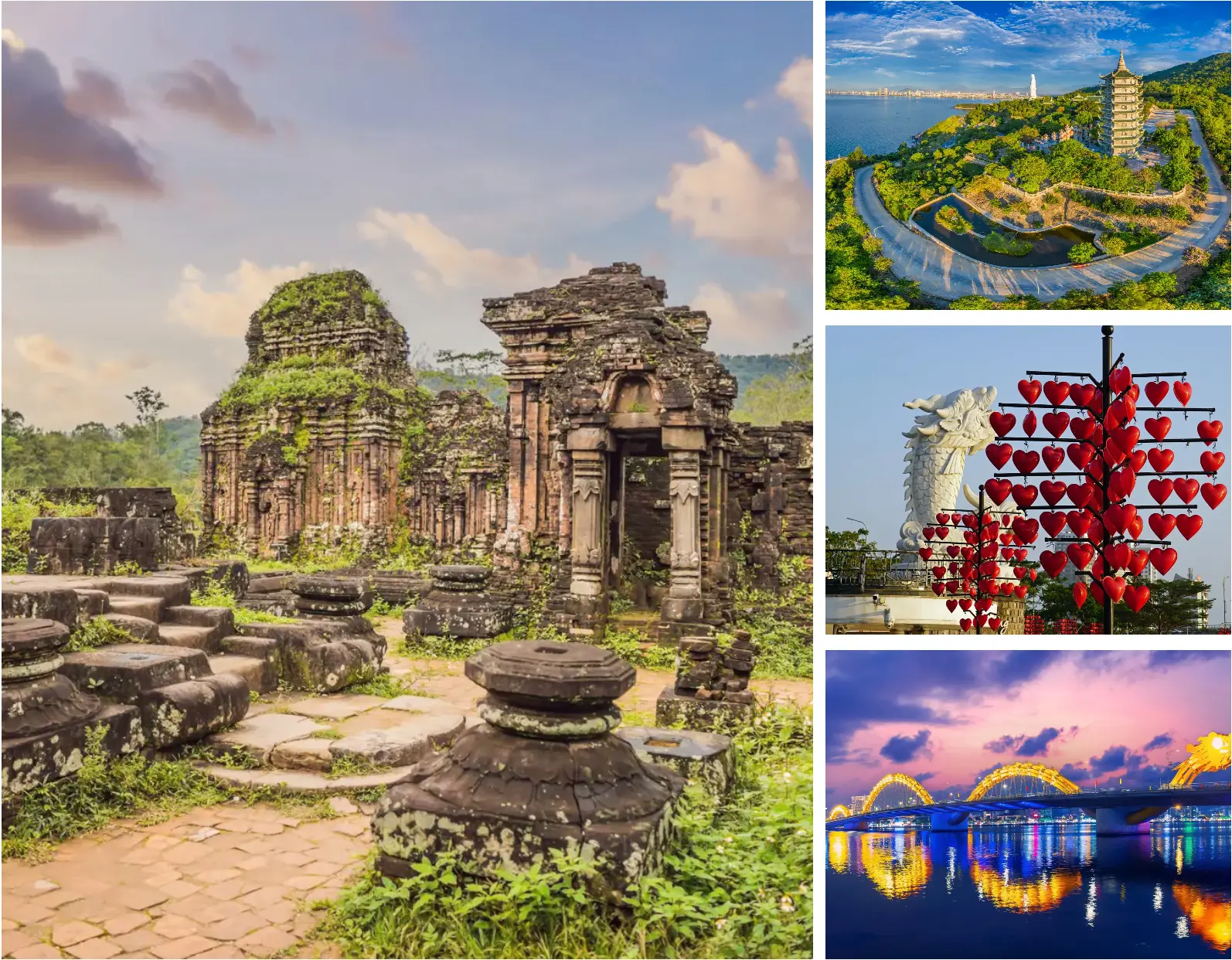
DAY 7: DA NANG – MY SON – DA NANG (140 km)
From central Da Nang, the group heads southwest to My Son Sanctuary, temporarily leaving the city rhythm behind to discover a temple-tower complex nestled in a green valley. The ancient brickwork and sculptural details offer an encounter with Cham culture before guests return to the city and travel along the coastal road northeast to Linh Ung Pagoda on Son Tra Peninsula. From this seaside setting, the journey takes the group to Love Bridge and Dragon Bridge along the Han River.
My Son Sanctuary: Cham temple towers in a valley reflecting the architectural, sculptural, and religious heritage of Champa. The ancient brickwork blends with the green landscape to create the site’s distinctive beauty.
Linh Ung Pagoda, Son Tra: A pagoda overlooking the sea with a prominent Avalokitesvara statue. Guests can pay respects, enjoy the sea views, and look toward the city from the mountainside.
Love Bridge: A riverside walking and photo spot along the Han River, suitable for capturing moments with family and friends.
Dragon Bridge: A bridge featuring the distinctive shape of a dragon, characteristic of Da Nang. Guests can admire its architecture and experience the youthful appearance of the city along the river.
The program ends in Da Nang.
Book This Tour
Attractions
-
Hai Van Gate 70,000vnd/pax
-
Hue Imperial Citadel 200,000vnd/pax
-
An Dinh Palace 50,000vnd/pax
-
Khai Dinh Tomb 150,000vnd/pax
-
Banh It Towers 20,000vnd/pax
-
Eo Gio + Ngoc Hoa Monastery 50,000vnd/pax
-
Quang Trung Museum and Tay Son Shrine 50,000vnd/pax
-
Cam Thanh Coconut Forest 200,000vnd/pax
-
Hoi An Ancient Town 120,000vnd/pax
-
Thanh Ha Pottery Village 50,000vnd/pax
-
Lua village 50,000vnd/pax
-
Marble Mountains 40,000vnd/pax
-
My Son Sanctuary 150,000vnd/pax
Vietnam South Central
Da Nang • Hue • Quang Ngai • Quy Nhon • Mang Den • Hoi An • Da Nang
Itinerary
-
DAY 1: DA NANG – HUE (145 km)
Departing from Da Nang, a young coastal city by the Han River, you temporarily leave the bustling streets behind and head north along the Hai Van Pass. The winding road follows the mountain slopes, opening up views that alternate between the sea and the green forest. Stop at Hai Van Gate, where the group can appreciate the grandeur of the ancient gateway before continuing to Hue.
Hai Van Gate: An ancient gateway on the summit of Hai Van Pass, standing out amid the mountain and sea scenery. Guests can enjoy the views, take photos, and experience the grandeur of the route connecting Da Nang and Hue.
Hue Imperial City:Explore the imperial space of the Nguyen Dynasty through its gates, courtyards, palaces, and ancient decorative details. This stop helps guests visualize the grandeur of the former imperial court.
Museum of Royal Antiquities: The main exhibition building of the museum is Long An Palace, built during the reign of Emperor Thieu Tri. It currently preserves and displays many valuable artifacts of the Nguyen Dynasty.
Overnight in Hue.
-
DAY 2: HUE – QUANG NGAI (300 km)
From Hue, where the old tiled roofs and the Perfume River evoke a gentle charm, the group begins the new day with a visit to An Dinh Palace, pays respects at Thien Mu Pagoda beside the peaceful Perfume River, and visits Khai Dinh Tomb with its distinctive architectural features. These architectural landmarks serve as a lingering farewell before guests leave the ancient capital and travel south through the Lang Co area toward Quang Ngai. Along the journey, the scenery of Central Vietnam unfolds continuously through the vehicle windows, carrying the story from the land of heritage to the peaceful region along the Tra River.
An Dinh Palace: Located beside the An Cuu River, formerly in De Bat Ward, Hue Town, it was the private palace of Emperor Khai Dinh from the time he was Crown Prince until he became emperor. It was later inherited by Bao Dai, who lived here after his abdication.
Thien Mu Pagoda: A pagoda beside the Perfume River, featuring the distinctive Phuoc Duyen Tower. Its tranquil setting and poetic river scenery provide a gentle experience after the sightseeing journey.
Khai Dinh Tomb: A structure combining Eastern and Western architectural features. Its elaborate ceramic and porcelain mosaic art and intricate decorative details are notable highlights.
Overnight in Quang Ngai.
-
DAY 3: QUANG NGAI – QUY NHON (210 km)
Leaving the hotel in Quang Ngai, guests visit Minh Duc Pagoda to learn about the historical marks of the region before continuing south toward Quy Nhon. The urban rhythm gradually fades behind, giving way to successive landscapes along the Central Vietnamese coast. The journey then takes the group to Banh It Towers, where the ancient brick structures stand out against the green hills, followed by Thien Hung Pagoda with its tranquil garden setting. Upon reaching central Quy Nhon, guests can experience the approachable charm of the coastal city, where the rhythm of urban life blends with the expansive sky and sea.
Minh Duc Pagoda: An expansive pagoda complex featuring a prominent Avalokitesvara statue. Guests can visit, pay respects, and enjoy the scenery in a peaceful atmosphere.
Banh It Towers: A complex of Cham towers on a hill, with distinctive fired-brick structures standing out against the green landscape. Guests can admire the ancient architecture and take photos reflecting Cham cultural heritage.
Thien Hung Pagoda:Traditional architecture harmoniously combined with garden scenery. The peaceful setting is suitable for leisurely sightseeing and paying respects.
Overnight in Quy Nhon.
-
DAY 4: QUY NHON – MANG DEN (250 km)
From the coastal city of Quy Nhon, the group heads toward Nhon Ly, where the sea breeze and rocky scenery at Eo Gio begin a day of diverse experiences. After a peaceful stop at Ngoc Hoa Monastery and Ong Nui Pagoda, guests leave the coastal region and turn west toward Tay Son, visiting the Quang Trung Museum and the temple complex to learn about a historical period. The vehicle then continues toward the Central Highlands; the scenery gradually changes from the plains to mountainous roads, creating the feeling of entering a different land. Mang Den welcomes the group with the rhythm of a mountain town.
Eo Gio: Rocky cliffs embrace the sea inlet, creating a distinctive and expansive landscape. This is a stop for enjoying the sea views, the fresh breeze, and taking photos amid nature.
Ngoc Hoa Monastery:A prominent place of worship featuring a twin Buddha statue, providing a peaceful moment beside the coastal area of Nhon Ly.
Ong Nui Pagoda: Famous for the 69-meter-high seated Shakyamuni Buddha statue, including its pedestal, which is recognized as one of the largest seated Buddha statues in Southeast Asia.
Quang Trung Museum and Tay Son Temple Complex: Learn about the Tay Son movement and the national hero Quang Trung through documents, artifacts, and the solemn memorial space.
Overnight in Mang Den.
-
DAY 5: MANG DEN – HOI AN (260 km)
Departing from Mang Den, guests visit Our Lady of Mang Den, admire the spiritual center of the local people, and listen to the mysterious story of Our Lady, sincerely praying for peace in their hearts. The highland scenery and peaceful atmosphere of this pilgrimage site create a gentle beginning before the group continues toward Quang Ngai and down to the plains, then turns north toward Hoi An. Along each section of the journey, the green mountain forests gradually give way to rural landscapes and coastal towns. Upon arriving in Hoi An, yellow-walled houses, old tiled roofs, and lanterns open up a warm atmosphere, inviting visitors to slow their steps amid the charm of the ancient town.
Our Lady of Mang Den: A pilgrimage site amid the tranquil highland landscape. Guests also have the opportunity to try their hand at shaping pottery products, coloring them according to their own preferences, and taking them home as souvenirs.
Cam Thanh Coconut Forest: Explore the cool, green nipa palm landscape and small waterways. The river experience offers a simple and intimate perspective of Hoi An.
Hoi An Ancient Town:Hoi An was once a bustling international trading port, where merchant ships from Japan, China, and the West met throughout the 17th and 18th centuries. The old streets imbued with the passage of time will surely give you an unforgettable memory.
Overnight in Hoi An.
-
DAY 6: HOI AN – DA NANG (55 km)
From Hoi An, with its small streets imbued with an old-world charm, the journey offers guests a different perspective of Hoi An through two traditional craft villages: the Silk Village and Thanh Ha Pottery Village. The group continues to visit Thanh Ha Pottery Village and the Silk Village, where stories of earth, nature, and the hands of artisans continue to be preserved through each product. Continuing north, guests visit Marble Mountains before arriving in central Da Nang. From the rhythm of traditional craft villages to the limestone mountains and the broad streets of the coastal city, each stage offers its own interesting experience.
Silk Village: This place preserves and recreates the history of more than 300 years of sericulture and silk weaving in Quang, together with the cultural space of the “Maritime Silk Road” in the 17th century.
Thanh Ha Pottery Village: Learn about traditional pottery through the processes of shaping and creating simple handmade products. The skill of the artisans is a highlight that makes the village attractive. Guests also have the opportunity to try their hand at shaping pottery products, coloring them according to their own preferences, and waiting to take them home as souvenirs.
Marble Mountains: A complex of limestone mountains, caves, and pagodas creating a distinctive landscape. Guests explore the natural beauty intertwined with the spiritual atmosphere of this scenic site.
Overnight in Da Nang.
-
DAY 7: DA NANG – MY SON – DA NANG (140 km)
From central Da Nang, the group heads southwest to My Son Sanctuary, temporarily leaving the city rhythm behind to discover a temple-tower complex nestled in a green valley. The ancient brickwork and sculptural details offer an encounter with Cham culture before guests return to the city and travel along the coastal road northeast to Linh Ung Pagoda on Son Tra Peninsula. From this seaside setting, the journey takes the group to Love Bridge and Dragon Bridge along the Han River.
My Son Sanctuary: Cham temple towers in a valley reflecting the architectural, sculptural, and religious heritage of Champa. The ancient brickwork blends with the green landscape to create the site’s distinctive beauty.
Linh Ung Pagoda, Son Tra: A pagoda overlooking the sea with a prominent Avalokitesvara statue. Guests can pay respects, enjoy the sea views, and look toward the city from the mountainside.
Love Bridge: A riverside walking and photo spot along the Han River, suitable for capturing moments with family and friends.
Dragon Bridge: A bridge featuring the distinctive shape of a dragon, characteristic of Da Nang. Guests can admire its architecture and experience the youthful appearance of the city along the river.
The program ends in Da Nang.